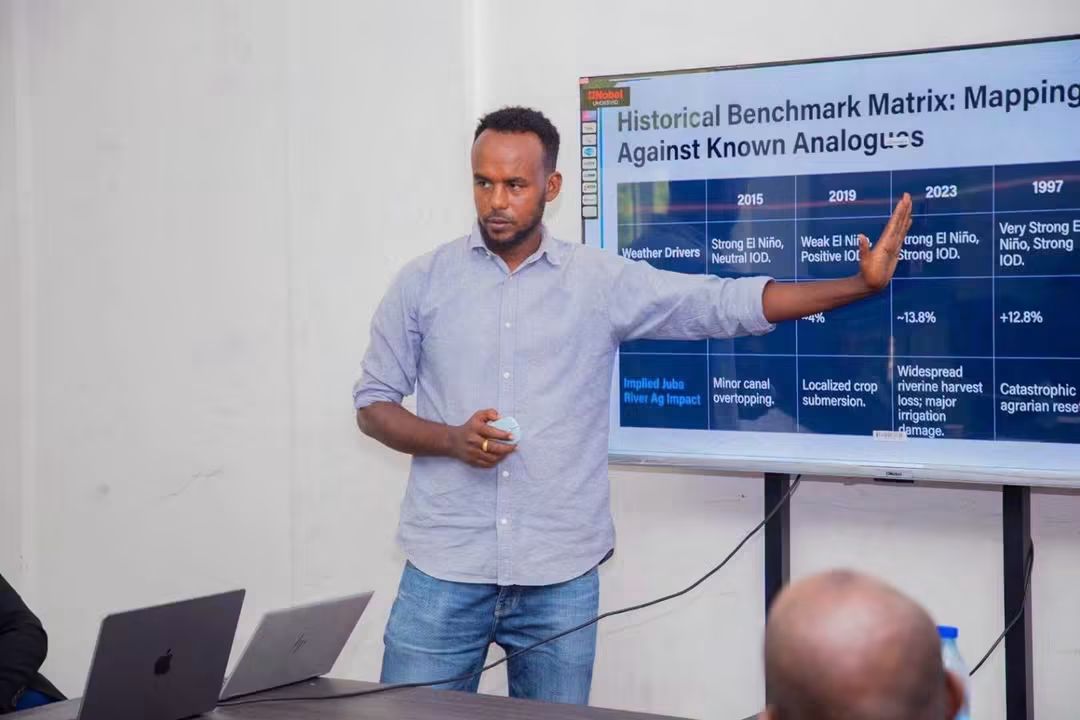

The Ministry of Agriculture and Irrigation of the Jubaland State of Somalia has convened a key meeting to review and strengthen the Early Warning System (EWS) in response to the anticipated impacts of El Niño, with a particular focus on safeguarding farming communities.
The meeting centered on enhancing preparedness measures, monitoring climate developments, and ensuring the timely dissemination of accurate early warnings to communities.
Participants emphasized the importance of reducing the potential risks associated with El Niño-related weather events through proactive planning and informed decision-making.
The session was officially attended by the Director General of the Ministry of Agriculture and Irrigation, Mohamed Mursal Hirsi, who underscored the critical role of a robust early warning system in protecting livelihoods.
He stressed the need to provide communities, especially farmers, with reliable and timely information to help them prepare effectively for changing weather conditions.
During the meeting, Abdikarim Olad Abdi, Meteorology Department Officer at the Ministry, delivered a comprehensive briefing on current climate conditions, El Niño forecasts, and practical measures farmers can adopt to mitigate potential impacts. He highlighted the importance of climate awareness and preparedness in strengthening the resilience of the agricultural sector.
Participants also examined a range of strategies that farmers can implement to reduce climate-related risks. These include closely following weather forecasts and early warning advisories, carefully planning planting seasons, selecting crop varieties and seeds suited to expected weather conditions, and improving drainage systems and irrigation canals to minimize the effects of excessive rainfall and flooding.
The Ministry reaffirmed its commitment to further strengthening the Early Warning System and ensuring that climate information reaches farmers in a timely manner. By improving access to weather forecasts and early alerts, the Ministry aims to support farmers in making informed decisions, protecting agricultural assets, and reducing potential crop losses caused by extreme weather events.
The initiative reflects Jubaland’s ongoing efforts to build climate resilience and enhance preparedness across the agricultural sector, helping communities better withstand the challenges posed by El Niño and other climate-related hazards.